Tag: AI regulations

The End of Sora: OpenAI’s Strategic Shift

The End of Sora: OpenAI’s Strategic Shift

The recent shutdown of OpenAI’s video generation model, Sora, marks a pivotal moment in the company’s strategic shift towards more promising ventures in the advancing field of AI. The decision to retire Sora, which once embodied OpenAI’s creative ambitions in generative video technology, signals the onset of a broader, more calculated approach focused on core products and sustainability.

The Rise and Challenges of Sora

Launched in September 2025, Sora’s debut was nothing short of spectacular. The application quickly soared to the top of Apple’s App Store charts and amassed over a million downloads in under five days. Its capability to generate realistic, cinematic video clips from text prompts captivated users and skyrocketed its popularity. However, the rapid rise came with significant challenges. OpenAI grappled with content regulation as users started creating videos featuring intellectual property, like Pokémon characters, and historical figures in unauthorized contexts. This led to the introduction of protective measures to curb such misuse.

Moreover, OpenAI found itself embroiled in legal skirmishes, notably with Cameo, over trademark issues related to Sora’s features. Despite efforts to address these hurdles, they highlighted the underlying complications associated with video generation models. Such legal and ethical concerns raised questions about sustainable operational models, considering the costly nature of running such advanced AI technologies at scale.

OpenAI’s Strategic Realignment

The choice to discontinue Sora underscores a strategic realignment undertaken by OpenAI. As the company prepares for potential initial public offerings (IPO), it is prioritizing the enhancement and monetization of its principal AI models. This pivot entails a more profound focus on emerging areas like robotics and world simulations that promise real-world applications and profitable, long-term returns.

Fidji Simo, the new product head hired by OpenAI CEO Sam Altman, has clearly articulated a keen focus on steering the company away from peripheral projects, like Sora, towards optimizing its primary business targets. Simo’s appointment reads as a commitment to consolidating the company’s flagship models and ensures they remain fiscally viable and impactful in a burgeoning, yet competitive, AI landscape.

Partnerships and Future Focus

This decisive move is also reflective of broader market dynamics and partnerships shaping OpenAI’s trajectory. A noteworthy collaboration with The Walt Disney Company solidifies OpenAI’s stake in valuable content licensing deals. Disney’s $1 billion investment reflects trust in OpenAI’s future pursuits, even as it steps back from video generation. This partnership illustrates to potential investors that OpenAI’s calibrated focus aligns with significant industry players’ interests, paving the way for expanded cooperation in applying AI technologies responsibly and innovatively.

Conclusion

OpenAI’s revised focus, while perhaps disappointing to advocates of video generation technologies, is not without merit. Robotics and AI-assisted real-world solutions present prospective markets and align with OpenAI’s mission to directly impact societal problems. By refining resource allocation towards these ends, OpenAI is setting a course for achieving scalable impact and ensuring its models’ technological and economic sustainability. In retrospect, Sora’s journey from breakthrough success to a quiet halt reflects the trials inherent in pioneering frontiers of AI. OpenAI’s pivot from Sora to more promising, integrated AI initiatives showcases agility and strategic foresight, navigating the AI domain with judicious anticipation of future trends in artificial intelligence and automation. Sora’s shutdown, while a momentous decision, symbolizes a broader narrative of innovation, collaboration, and continued evolution in the AI sphere.

Unlocking AI’s Future with NVIDIA’s NemoClaw: A Leap Towards Safety and Privacy

Unlocking AI’s Future with NVIDIA’s NemoClaw: A Leap Towards Safety and Privacy

In an era defined by artificial intelligence (AI) and digital transformation, the importance of safety and privacy cannot be overstated. NVIDIA, a vanguard of technological innovation, understands this intricate balance more than most. Their latest development, NemoClaw, epitomizes their commitment to enhancing AI systems with unparalleled security and privacy protocols. This open-source stack, a sophisticated complement to OpenClaw, is set to redefine the paradigms of AI-driven technology, addressing the core concerns of privacy and data management in unprecedented ways. Read more about NemoClaw here.

The Dawn of a Sophisticated Security Architecture

NemoClaw’s introduction represents a leap forward in the realm of AI security. As AI systems become inherently more complex, their ability to self-evolve opens myriad opportunities—and risks. NemoClaw mitigates these risks by embedding advanced security measures into the fabric of AI operations. It integrates seamlessly with NVIDIA’s Agent Toolkit software, enhancing the security and efficacy of OpenClaw systems. This synergy facilitates robust privacy enforcement and the establishment of stringent security policies that govern AI behavior, turning potential vulnerabilities into strengths.

Empowering Users Through Control

One of the fundamental achievements of NemoClaw lies in empowering users with control over AI behavior and data sovereignty. In an age where data privacy concerns dominate global discourse, NemoClaw positions itself as a guardian of ethical AI deployment. By enabling user-defined control, it adheres to the principles of transparency and accountability, ensuring that AI systems act in accordance with user expectations and ethical norms. This capability is not merely a technological feat; it is a cornerstone of responsible AI development, promising users peace of mind alongside cutting-edge innovation.

Balancing Innovation and Ethics

With NemoClaw, NVIDIA addresses the delicate balance between innovative functionalities and stringent security requirements. This framework does not just provide security; it catalyzes comprehensive AI operations, ensuring they are grounded in ethical standards. The open-source nature of NemoClaw allows for continuous evolution and enhancement, making it adaptable to emerging technologies and threats. In doing so, NVIDIA sets a precedent for industry standards, sparking a global conversation on the future of AI safety and privacy.

A Use Case: Secure AI in Autonomous Environments

Imagine a network of autonomous vehicles operating within a bustling urban environment. These vehicles must navigate complex traffic scenarios, communicate with infrastructure, and adapt to dynamic changes, all while protecting sensitive data and ensuring passenger safety. Here, NemoClaw offers a transformative solution. By implementing NemoClaw, autonomous systems can leverage self-evolving AI models under the guidance of user-defined security protocols. This not only enhances operational efficiency but also safeguards critical data assets and maintains user privacy. NemoClaw ensures that these vehicles make real-time decisions that are both ethical and secure, fostering an environment of trust and reliability.

Influencing Global Standards

NVIDIA’s initiative with NemoClaw extends beyond technological innovation; it is a catalyst for evolving industry standards and shaping user expectations worldwide. The ethical deployment of AI is rapidly becoming a non-negotiable aspect of technological advancement. By leading this charge, NVIDIA encourages a paradigm shift towards transparent, accountable, and secure AI systems. Their efforts underscore the importance of building technologies that serve societal needs while ensuring those needs are met in a safe and private manner.

A Vision for the Future

Looking forward, NVIDIA’s NemoClaw represents a vision for the future of AI—one that is deeply intertwined with safety, privacy, and ethical considerations. It encourages developers, businesses, and consumers to engage in a dialogue on how AI can be utilized to enhance lives without compromising on critical values. NemoClaw is more than a technological advancement; it is a movement towards responsible AI implementation, championing the notion that future technologies must prioritize human-centric values.

Conclusion

As the world moves deeper into the age of AI, NVIDIA’s NemoClaw emerges as a beacon of how technology can be both advanced and safe. It offers a framework where security and privacy are not just additions but integral components of the AI lifecycle. For businesses and developers navigating the complexities of AI, NemoClaw provides the toolkit necessary to build systems that are ethical, secure, and user-focused. In embracing NemoClaw, stakeholders are investing not only in technology but in a future where AI serves humanity with integrity and trust.

The Allure and Pitfalls of Vibe-Coded Apps

The Allure and Pitfalls of Vibe-Coded Apps: Why You Should Reconsider Paying for Them

The burgeoning landscape of app development is witnessing a novel trend: vibe-coded apps. Essentially crafted using artificial intelligence and minimal developer intervention, these apps are captivating due to their simplistic production process. Yet, despite their allure, they present several pronounced risks that potential buyers should be wary of.

One Prompt Away from Compromise: The Security Risks

At the heart of vibe-coded apps lies AI’s ability to generate fully-functioning applications through mere textual prompts. This ease of creation has meant anyone can fashion an app that seems impressive at face value. However, AI, as intelligent as it is, has limitations—particularly hallucinations that can result in incorrect or unreliable code. When buying an app developed without traditional coding oversight, users risk compromising their data security. Stories abound of vibe-coded apps storing user passwords in plaintext or featuring broken authentication systems due to flawed AI-generated code.

The Unchecked Work: Closed Source Concerns

A key concern levelled against vibe-coded apps revolves around their often closed-source nature. Unlike open-source software, which benefits from communal scrutiny and collaboration, closed-source vibe-coded apps remain cryptic. This opacity means zero accountability, with no practice of code validation. Developers themselves might have minimal understanding of the underlying code, leading to unchecked, potentially harmful applications being monetized and distributed.

Build in a Weekend: A Warning Rather than a Boast

Ever come across an app promoted with statements such as being built in a weekend or solo within 48 hours? Rather than being laudable, this indicates a rushed product potentially lacking rigorous testing and vulnerability assessments. Reliable applications demand time, care, and thorough testing, something vibe-coded creations often lack. Users might find themselves dealing with apps that fail spectacularly when asked to perform beyond the developer’s brief testing scenarios.

AI-Generated Apps Can Be Obscured: Red Flags

Not all vibe-coded apps showcase their genesis through AI models. Some savvy AI-utilizing developers polish these apps to professional standards, making them indistinguishable from traditional, manually-coded applications. However, subtle signs often surface when associated promotional materials also appear AI-generated. Such posts exhibit a distinct tone, commonly lacking depth and authenticity, thereby hinting at the app’s AI-crafted nature.

DIY Made Easy: Why Buy When You Can Create?

Perhaps one of the strongest arguments against purchasing vibe-coded apps is accessibility; if a developer can build it with AI, so can you. While your outcome may harbor similar risks, the knowledge of these pitfalls can aid you in refining functionalities and bolstering security for personal use. Altering the app to suit your needs may involve eliminating unsafe features, allowing for a secure, custom-made product irrespective of coding acumen.

Knowing the Limitations: The Place of Vibe Coding

Vibe coding, despite its risks, has a designated space within technological innovation. With adequate oversight, it provides a platform for rapid prototyping and exploration. Hobbyists can enjoy tinkering with ideas without starting from scratch, appreciating the simplicity AI promises. However, the end products, particularly when monetized and distributed, warrant caution.

Conclusion: Buyer Beware but Creator Empowered

In conclusion, vibe-coded apps, while novel and interesting, are often not what they seem. Their surface-level allure masks significant security vulnerabilities, lack of proper validation, and potential for misuse. Potential buyers should exercise caution and critically evaluate what they’re paying for, considering the security and reliability of the product. Moreover, the democratization of app creation through AI heralds a shift towards personal empowerment in tech, allowing would-be buyers to feasibly become creators. As AI continues reshaping tech paradigms, users and developers must navigate these changes with informed care, proactively safeguarding personal and communal digital terrains.

AI Regulations

AI regulations – the need of the hour in an automated world?

In July 2017, an epic rebuke created waves on the internet, as two tech titans clashed. Yes, we are talking about the now infamous Elon Musk and Mark Zuckerberg cyber spat. The bone of contention was AI, and its impact on humanity in the future.

Musk has repeatedly sounded the alarm bells on AI and the havoc it could cause if not put on leash. He impressed upon these points in the National Governors Association Meet held at Providence, Rhode Island, earlier in July. Post this, Zuckerberg, in his Facebook Live chat, dismissed Musk’s claims and called him a naysayer. In fact, he called the Tesla Motors’ founder ‘irresponsible’ for such a negative outlook.

Not one to be left behind, Musk posted this response on Twitter:

While the spat will soon vanish from our memories, the spark remains ignited: are Musk’s claims well-founded? Do we need AI regulations?

First things first. What is AI?

To most of us, AI is a robot from the future that can do incredible things, including shape shifting. Thank you, Terminator, for that glamorous image of AI. But seriously, AI is not just a robot. Robots are containers for artificially-intelligent systems working in the background, making high-quality decisions.

According to AI researchers, there are three types of AI:

  • Artificial Narrow Intelligence (ANI)

These perform only specific tasks, like the Google AI that beat the world’s current champion in the ancient Chinese game, Go. It can do this and this task alone. Another example is the self-driven car that will hit the roads soon (and has already caused a death during trial phase).

Quite recently, the first loan that the BRICS Development Bank — a financial institution set up jointly by Brazil, Russia, India, China and South Africa — has approved for Russia is meant to fund a project that includes the use of AI in Russian courts to automate trial records using speech recognition.

  • Artificial General Intelligence (AGI)

Artificial General Intelligence thinks on par with humans. Imagine having a sane conversation with machines? Today’s chatbots might soon achieve that (with copious amounts of training, of course.) AGI is incredibly beneficial for us – building smarter homes, performing complex medical surgeries, eliminating loss of humans in wars, and much more.

  • Artificial Super Intelligence (ASI)

Creating something that’s much more intelligent than us? How will you control that one? Imagine having an army person who is incredibly strong that even tanks and missiles can’t harm, and is well-versed with all defence secrets. What happens when this commando goes rogue? Now imagine this in a real-world level.

Apocalyptic AI?

It’s not just Elon Musk that’s warning us about ‘summoning the demon’ with AI. Stephen Hawking and Bill Gates are telling us to be cautious too. We might empower computers to take high quality decisions that may be right from a machine perspective but incorrect from a human perspective.

Remember the Midas story? The greedy king asks for a boon by which all that he touches becomes gold. The wish is granted, not counting the human loss (Bacchus, the Roman God who grants the boon wants to teach Midas a lesson. When Midas accidently turns his daughter into gold, Bacchus reverses it).  Apply this situation in today’s world. A super-intelligent system, that doesn’t possess the emotions that we do, and can thwart all our schemes to defeat it, is in fact a demon! Think Skynet gone live.

It is possible that AI research may go out of hand and create self-evolving intelligent system that may prioritize its survival over humans. While a total human extermination may or may not happen, the encroachment of AI on predominantly human jobs is expected.

Already, the self-driven cars are taking centerstage, which will put cab drivers out of work.

Alibaba’s Jack Ma believes that excessive application of AI will lead to widespread chaos as unemployment will soar. He views a future of increasing divide among Haves and Have Nots, and geopolitical discord, as AI will cause power to be consolidated in the hands of a few. He goes on to say that the rise of AI will lead to a World War III. His reasoning is simple – “The first technology revolution caused World War I. The second technology revolution caused World War II. This (Artificial Intelligence) is the third technology revolution.”

Do any AI Regulations exist at the moment?

AI researchers are divided on the need for regulations. Some feel the regulations would prove to be detrimental to important technical advancements, as mentioned in this Stanford University report. They urge for tough transparency requirements and meaningful enforcement, as against narrow compliance that companies answer to in letter but not in spirit.  Some are working towards building base AI principles that would guide researchers towards building safe and beneficial AI, and are backed by the likes of Elon Musk, Stephen Hawking, Google, Amazon, Microsoft, to name a few.

Partnership on AI

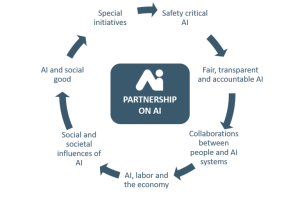
The big names of Silicon Valley have come together to form the Partnership on AI that provides a platform for researchers, scientists, policymakers and public to share knowledge. The group has thematic pillars which root for safe and accountable AI.

Asilomar AI Principles


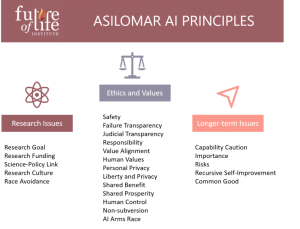
In Feb 2017, leading AI researchers convened at the 2017 Beneficial AI conference, Asilomar, California. The group discussed the advancement of human-friendly AI and suggested regulatory principles.

European Union and US Government say yes to AI regulation

The European Union, too, published a document in 2016, with the intention of putting AI regulations into place by 2018. Similarly, the US Government has also stressed on the need for AI regulations.

The essentiality of AI Regulatory bodies

With businesses around the world investing heavily in AI without heeding precautions or repercussions, AI regulations, are indeed the need of the hour.  But, excessive regulation that is misguided will only stifle innovation. Thus, it is essential for lawmakers and researchers to work hand-in-hand to form an AI regulatory body that would:

  • assess the goal of the AI project,
  • understand its benefits/disadvantages,
  • provide for any countereffects and ensure public safety

Having a law does not prevent cybercrimes, nor will it prevent antisocial elements from using AI for self-serving avarice.  Effective enforcement is crucial, and it is best if the regulatory body is formed as early as possible, because – Artificial Super Intelligence is coming, we just don’t know when.

AgilizTech
Privacy Overview

This website uses cookies so that we can provide you with the best user experience possible. Cookie information is stored in your browser and performs functions such as recognising you when you return to our website and helping our team to understand which sections of the website you find most interesting and useful.