Category: Artificial Intelligence (AI)

The Open-Source Revolution: Sarvam AI’s 30B and 105B Models

The Open-Source Revolution: Sarvam AI’s 30B and 105B Models

Sarvam AI stands at the forefront of innovation, driven by the mission to deliver advanced artificial intelligence solutions through locally cultivated efforts within India. Established with the vision to blend technology and indigenous expertise, Sarvam AI focuses on developing scalable and impactful AI models. Operating under the IndiaAI initiative, the company is committed to facilitating cutting-edge advancements in artificial intelligence, ensuring its technologies remain accessible and beneficial to both local and global community. The recent open-source release of their pioneering models, Sarvam 30B and 105B, underscores their dedication to propelling India’s capabilities and prominence on the international AI stage.

In an exciting development on March 6, 2026, Sarvam AI introduced their groundbreaking AI models, Sarvam 30B and Sarvam 105B, to the global community. This endeavor, entirely developed in India under the ambitious IndiaAI mission, marks a pivotal moment in the AI landscape with its open-source release. The models signify a comprehensive full-stack effort in AI creation, leveraging indigenous resources from tokenization to inference deployment.

Sarvam 30B and 105B are engineered to offer advanced reasoning capabilities, having been trained on extensive, high-quality datasets native to India. These models are designed for scalable deployment across a variety of hardware platforms, from high-end GPUs to personal devices, ensuring efficient performance paired with minimal computational overhead.

Sarvam 30B facilitates Samvaad, a conversational agent platform, while Sarvam 105B serves as the core for Indus, an AI assistant engineered for handling complex workflows. Internationally competitive, both models excel particularly in Indian languages, even surpassing larger models on language benchmarks due to their optimized tokenization approach.

The architecture of these models embraces a Mixture-of-Experts (MoE) framework, which employs sparse expert routing and attention mechanisms, effectively managing parameter scaling challenges. The training comprised several phases, integrating diverse sources including code, multilingual content, and mathematical data, with a pronounced focus on Indian languages. This approach ensured a robust and wide-ranging informational foundation.

Fine-tuning involved high-quality prompts across domains, refining the models’ abilities to navigate intricate tasks. Safety fine-tuning specifically addressed India-centric risks, ensuring responses are culturally and relevantly aware. Reinforcement learning further enriched their capabilities, focusing on diverse prompt handling, structured responses, correct reasoning, and tool utilization.

Notably, Sarvam 105B distinguishes itself with formidable performance across knowledge domains, achieving top-tier results in multiple benchmarks. The models underscore an investment in the Indian AI ecosystem, showcasing strong capacities in Indian languages and optimized economic viability for deployment—Sarvam 30B designed for varied inference deployments, while Sarvam 105B tailored for server-based operations, maximizing efficiency and throughput.

This release is not merely technical; it signifies a strategic push towards sovereign AI technologies in India. Sarvam AI extends global outreach by offering model weights and API access, intending to provide foundational infrastructure for advancing future AI innovations within the country. Supported extensively by the Indian government and in collaboration with Nvidia, these models symbolize a significant technical milestone and a strategic vision toward AI autonomy.

Looking ahead, Sarvam AI aspires to scale these efforts, utilizing the developed infrastructure and expertise to train even more sophisticated models. This initiative heralds a promising future for AI advancements, both within India and globally, reinforcing India’s position as a prominent player in the AI domain.

The End of Sora: OpenAI’s Strategic Shift

The End of Sora: OpenAI’s Strategic Shift

The recent shutdown of OpenAI’s video generation model, Sora, marks a pivotal moment in the company’s strategic shift towards more promising ventures in the advancing field of AI. The decision to retire Sora, which once embodied OpenAI’s creative ambitions in generative video technology, signals the onset of a broader, more calculated approach focused on core products and sustainability.

The Rise and Challenges of Sora

Launched in September 2025, Sora’s debut was nothing short of spectacular. The application quickly soared to the top of Apple’s App Store charts and amassed over a million downloads in under five days. Its capability to generate realistic, cinematic video clips from text prompts captivated users and skyrocketed its popularity. However, the rapid rise came with significant challenges. OpenAI grappled with content regulation as users started creating videos featuring intellectual property, like Pokémon characters, and historical figures in unauthorized contexts. This led to the introduction of protective measures to curb such misuse.

Moreover, OpenAI found itself embroiled in legal skirmishes, notably with Cameo, over trademark issues related to Sora’s features. Despite efforts to address these hurdles, they highlighted the underlying complications associated with video generation models. Such legal and ethical concerns raised questions about sustainable operational models, considering the costly nature of running such advanced AI technologies at scale.

OpenAI’s Strategic Realignment

The choice to discontinue Sora underscores a strategic realignment undertaken by OpenAI. As the company prepares for potential initial public offerings (IPO), it is prioritizing the enhancement and monetization of its principal AI models. This pivot entails a more profound focus on emerging areas like robotics and world simulations that promise real-world applications and profitable, long-term returns.

Fidji Simo, the new product head hired by OpenAI CEO Sam Altman, has clearly articulated a keen focus on steering the company away from peripheral projects, like Sora, towards optimizing its primary business targets. Simo’s appointment reads as a commitment to consolidating the company’s flagship models and ensures they remain fiscally viable and impactful in a burgeoning, yet competitive, AI landscape.

Partnerships and Future Focus

This decisive move is also reflective of broader market dynamics and partnerships shaping OpenAI’s trajectory. A noteworthy collaboration with The Walt Disney Company solidifies OpenAI’s stake in valuable content licensing deals. Disney’s $1 billion investment reflects trust in OpenAI’s future pursuits, even as it steps back from video generation. This partnership illustrates to potential investors that OpenAI’s calibrated focus aligns with significant industry players’ interests, paving the way for expanded cooperation in applying AI technologies responsibly and innovatively.

Conclusion

OpenAI’s revised focus, while perhaps disappointing to advocates of video generation technologies, is not without merit. Robotics and AI-assisted real-world solutions present prospective markets and align with OpenAI’s mission to directly impact societal problems. By refining resource allocation towards these ends, OpenAI is setting a course for achieving scalable impact and ensuring its models’ technological and economic sustainability. In retrospect, Sora’s journey from breakthrough success to a quiet halt reflects the trials inherent in pioneering frontiers of AI. OpenAI’s pivot from Sora to more promising, integrated AI initiatives showcases agility and strategic foresight, navigating the AI domain with judicious anticipation of future trends in artificial intelligence and automation. Sora’s shutdown, while a momentous decision, symbolizes a broader narrative of innovation, collaboration, and continued evolution in the AI sphere.

Introducing MAI-Image-2: A Leap Forward in Text-to-Image Technology

In the dynamic world of artificial intelligence, innovations emerge with awe-inspiring regularity. Today, Microsoft proudly announces the launch of MAI-Image-2, which has shot to the rank of the third-best text-to-image model family on the Arena.ai leaderboard. This leap forward places Microsoft alongside industry giants in the realm of creative AI tools.

Central to this breakthrough is the MAI Playground, an interactive platform where creatives can test drive the latest iterations of Microsoft’s AI models. Beyond just testing, the Playground serves as a feedback conduit directly to Microsoft’s developers, ensuring that user insights fuel future enhancements.

Built for Creatives, Guided by Creatives

The development journey of MAI-Image-2 was marked by deep collaboration with photographers, designers, and visual storytellers. These conversations illuminated areas where AI could truly transform everyday creative workflows. The result is a tool finely tuned to meet the nuanced demands of visual artistry.

Enhanced Photorealism and Realistic Text Generation

At the heart of MAI-Image-2 is its extraordinary ability to render photorealistic images replete with natural lighting and life-like skin tones. Environments are crafted to feel authentic, reducing the need for extensive post-production edits. This realism ensures that creatives can invest more time in conceptualization rather than correction.

A distinctive feature is its capability for reliable in-image text generation. Whether it’s a movie poster title or a subtle street sign in a cinematic scene, MAI-Image-2 excels in producing text that feels integrated and intentional. This opens new avenues for creators to generate infographics, presentations, and visual narratives with minimal friction.

Rich, Detail-Oriented Scene Creation

Beyond realism, MAI-Image-2 caters to creative extremities – from surreal dreamscapes to opulent compositions. Its ability to generate rich, detailed environments makes it a preferred choice for artists challenging the boundaries of imagination. By transforming fantastical concepts into tangible imagery, it empowers creators to explore uncharted aesthetic territories.

Commercial and Developer Access

Beginning its rollout on platforms like Copilot and Bing Image Creator, MAI-Image-2’s reach is expanding. For businesses like WPP that require scalable image generation solutions, API access is already available. Moreover, a broader invitation is extended to developers through Microsoft Foundry, promising a wave of innovative applications across industries.

Businesses eager to harness MAI-Image-2 for commercial purposes are invited to apply for access, ensuring that this technological marvel is also a business enabler.

The Road Ahead: Pioneering with Superintelligence

Microsoft’s AI Superintelligence team assures there’s much more to anticipate. With the new GB200 cluster operational, the roadmap for MAI presents untapped potentials. Collaborating closely with product teams, MAI models are being positioned to impact billions, fostering creativity and innovation at an unprecedented scale.

Join the Movement

Microsoft extends an open invitation to brilliant, motivated individuals with a low ego and a high ambition. If you resonate with this ethos, the team offers an exciting frontier in AI innovation waiting to be explored. As they work on the next generation of models, the doors are open for those ready to leave a mark on the AI landscape.

As MAI-Image-2 rolls out to users worldwide, the call is not just to witness but to participate actively in its evolution. Whether through feedback in the Playground or commercial applications, every user contributes to a model that is as collaborative as it is powerful. The promise of AI-driven creativity is no longer a distant vision—it is here, ready and waiting in the form of MAI-Image-2.

For more details, visit the original article here.

Unlocking AI’s Future with NVIDIA’s NemoClaw: A Leap Towards Safety and Privacy

Unlocking AI’s Future with NVIDIA’s NemoClaw: A Leap Towards Safety and Privacy

In an era defined by artificial intelligence (AI) and digital transformation, the importance of safety and privacy cannot be overstated. NVIDIA, a vanguard of technological innovation, understands this intricate balance more than most. Their latest development, NemoClaw, epitomizes their commitment to enhancing AI systems with unparalleled security and privacy protocols. This open-source stack, a sophisticated complement to OpenClaw, is set to redefine the paradigms of AI-driven technology, addressing the core concerns of privacy and data management in unprecedented ways. Read more about NemoClaw here.

The Dawn of a Sophisticated Security Architecture

NemoClaw’s introduction represents a leap forward in the realm of AI security. As AI systems become inherently more complex, their ability to self-evolve opens myriad opportunities—and risks. NemoClaw mitigates these risks by embedding advanced security measures into the fabric of AI operations. It integrates seamlessly with NVIDIA’s Agent Toolkit software, enhancing the security and efficacy of OpenClaw systems. This synergy facilitates robust privacy enforcement and the establishment of stringent security policies that govern AI behavior, turning potential vulnerabilities into strengths.

Empowering Users Through Control

One of the fundamental achievements of NemoClaw lies in empowering users with control over AI behavior and data sovereignty. In an age where data privacy concerns dominate global discourse, NemoClaw positions itself as a guardian of ethical AI deployment. By enabling user-defined control, it adheres to the principles of transparency and accountability, ensuring that AI systems act in accordance with user expectations and ethical norms. This capability is not merely a technological feat; it is a cornerstone of responsible AI development, promising users peace of mind alongside cutting-edge innovation.

Balancing Innovation and Ethics

With NemoClaw, NVIDIA addresses the delicate balance between innovative functionalities and stringent security requirements. This framework does not just provide security; it catalyzes comprehensive AI operations, ensuring they are grounded in ethical standards. The open-source nature of NemoClaw allows for continuous evolution and enhancement, making it adaptable to emerging technologies and threats. In doing so, NVIDIA sets a precedent for industry standards, sparking a global conversation on the future of AI safety and privacy.

A Use Case: Secure AI in Autonomous Environments

Imagine a network of autonomous vehicles operating within a bustling urban environment. These vehicles must navigate complex traffic scenarios, communicate with infrastructure, and adapt to dynamic changes, all while protecting sensitive data and ensuring passenger safety. Here, NemoClaw offers a transformative solution. By implementing NemoClaw, autonomous systems can leverage self-evolving AI models under the guidance of user-defined security protocols. This not only enhances operational efficiency but also safeguards critical data assets and maintains user privacy. NemoClaw ensures that these vehicles make real-time decisions that are both ethical and secure, fostering an environment of trust and reliability.

Influencing Global Standards

NVIDIA’s initiative with NemoClaw extends beyond technological innovation; it is a catalyst for evolving industry standards and shaping user expectations worldwide. The ethical deployment of AI is rapidly becoming a non-negotiable aspect of technological advancement. By leading this charge, NVIDIA encourages a paradigm shift towards transparent, accountable, and secure AI systems. Their efforts underscore the importance of building technologies that serve societal needs while ensuring those needs are met in a safe and private manner.

A Vision for the Future

Looking forward, NVIDIA’s NemoClaw represents a vision for the future of AI—one that is deeply intertwined with safety, privacy, and ethical considerations. It encourages developers, businesses, and consumers to engage in a dialogue on how AI can be utilized to enhance lives without compromising on critical values. NemoClaw is more than a technological advancement; it is a movement towards responsible AI implementation, championing the notion that future technologies must prioritize human-centric values.

Conclusion

As the world moves deeper into the age of AI, NVIDIA’s NemoClaw emerges as a beacon of how technology can be both advanced and safe. It offers a framework where security and privacy are not just additions but integral components of the AI lifecycle. For businesses and developers navigating the complexities of AI, NemoClaw provides the toolkit necessary to build systems that are ethical, secure, and user-focused. In embracing NemoClaw, stakeholders are investing not only in technology but in a future where AI serves humanity with integrity and trust.

The Allure and Pitfalls of Vibe-Coded Apps

The Allure and Pitfalls of Vibe-Coded Apps: Why You Should Reconsider Paying for Them

The burgeoning landscape of app development is witnessing a novel trend: vibe-coded apps. Essentially crafted using artificial intelligence and minimal developer intervention, these apps are captivating due to their simplistic production process. Yet, despite their allure, they present several pronounced risks that potential buyers should be wary of.

One Prompt Away from Compromise: The Security Risks

At the heart of vibe-coded apps lies AI’s ability to generate fully-functioning applications through mere textual prompts. This ease of creation has meant anyone can fashion an app that seems impressive at face value. However, AI, as intelligent as it is, has limitations—particularly hallucinations that can result in incorrect or unreliable code. When buying an app developed without traditional coding oversight, users risk compromising their data security. Stories abound of vibe-coded apps storing user passwords in plaintext or featuring broken authentication systems due to flawed AI-generated code.

The Unchecked Work: Closed Source Concerns

A key concern levelled against vibe-coded apps revolves around their often closed-source nature. Unlike open-source software, which benefits from communal scrutiny and collaboration, closed-source vibe-coded apps remain cryptic. This opacity means zero accountability, with no practice of code validation. Developers themselves might have minimal understanding of the underlying code, leading to unchecked, potentially harmful applications being monetized and distributed.

Build in a Weekend: A Warning Rather than a Boast

Ever come across an app promoted with statements such as being built in a weekend or solo within 48 hours? Rather than being laudable, this indicates a rushed product potentially lacking rigorous testing and vulnerability assessments. Reliable applications demand time, care, and thorough testing, something vibe-coded creations often lack. Users might find themselves dealing with apps that fail spectacularly when asked to perform beyond the developer’s brief testing scenarios.

AI-Generated Apps Can Be Obscured: Red Flags

Not all vibe-coded apps showcase their genesis through AI models. Some savvy AI-utilizing developers polish these apps to professional standards, making them indistinguishable from traditional, manually-coded applications. However, subtle signs often surface when associated promotional materials also appear AI-generated. Such posts exhibit a distinct tone, commonly lacking depth and authenticity, thereby hinting at the app’s AI-crafted nature.

DIY Made Easy: Why Buy When You Can Create?

Perhaps one of the strongest arguments against purchasing vibe-coded apps is accessibility; if a developer can build it with AI, so can you. While your outcome may harbor similar risks, the knowledge of these pitfalls can aid you in refining functionalities and bolstering security for personal use. Altering the app to suit your needs may involve eliminating unsafe features, allowing for a secure, custom-made product irrespective of coding acumen.

Knowing the Limitations: The Place of Vibe Coding

Vibe coding, despite its risks, has a designated space within technological innovation. With adequate oversight, it provides a platform for rapid prototyping and exploration. Hobbyists can enjoy tinkering with ideas without starting from scratch, appreciating the simplicity AI promises. However, the end products, particularly when monetized and distributed, warrant caution.

Conclusion: Buyer Beware but Creator Empowered

In conclusion, vibe-coded apps, while novel and interesting, are often not what they seem. Their surface-level allure masks significant security vulnerabilities, lack of proper validation, and potential for misuse. Potential buyers should exercise caution and critically evaluate what they’re paying for, considering the security and reliability of the product. Moreover, the democratization of app creation through AI heralds a shift towards personal empowerment in tech, allowing would-be buyers to feasibly become creators. As AI continues reshaping tech paradigms, users and developers must navigate these changes with informed care, proactively safeguarding personal and communal digital terrains.

Copilot Cowork: Transforming the Dynamics of Work in Modern Enterprises

Copilot Cowork: Transforming the Dynamics of Work in Modern Enterprises

In an era dominated by rapid technological advancements, the advent of Copilot Cowork by Microsoft signifies a monumental shift in how work is conceptualized and executed. As articulated by Charles Lamanna in the blog “Copilot Cowork: A new way of getting work done,” this innovation moves beyond traditional boundaries of technology aiding human tasks to actually taking charge of tasks, fundamentally altering the workplace paradigm.

At its core, Copilot Cowork is designed to enhance productivity by automating actions across the Microsoft 365 ecosystem. Previously, the Copilot feature was celebrated for its ability to assist with finding information and drafting content like emails. However, Copilot Cowork takes this utility a notch higher by enabling it to perform actions, clear workflows, and manage tasks autonomously—ushering a new era of digital co-working.

This advanced feature is driven by Work IQ, leveraging data from Outlook, Teams, Excel, and more to impeccably understand, plan, and execute tasks. Users articulate desired outcomes, and Cowork grounds these within existing emails, meetings, files, and data. It forms a plan with discernible checkpoints allowing users to monitor progress, make adjustments, and maintain control over processes. The elegance of Copilot Cowork lies in its balance of independence and user control, providing a harmonious blend of automation and human oversight.

The practicality of Copilot Cowork is underpinned by real-world applications that resonate with everyday business needs. For instance, the tool’s capability to manage calendars is revolutionary. By reassessing schedules based on user priorities, it declutters calendars, reschedules appointments, and inserts focus periods to help maximize productivity. This ensures that professionals can focus on critical tasks while Cowork handles the organizational grunt work.

In preparation for meetings, Copilot Cowork proves indispensable. From synthesizing information into cohesive presentations to scheduling preparatory discussions, it transforms meetings from a chaotic ordeal into a streamlined process. This efficacy ensures professionals walk into meetings armed with well-prepared briefs and presentations, thus enhancing collaborative efforts and decision-making processes.

Research-intensive tasks, often time-consuming and rigorous, can now be efficiently managed by Copilot Cowork. By collating data from diverse sources, compiling summaries, and organizing findings, it significantly reduces the time investment required by professionals, allowing them to focus on strategic aspects of their roles.

Moreover, the tool shines when it comes to strategic initiatives like product launches. By automating the development of competitive analyses, value propositions, and pitches, Cowork transforms initial ideas into actionable plans swiftly. This capability ensures that organizations can remain agile and responsive to market shifts, driving greater competitive advantages.

Security and compliance are paramount in today’s digital landscape, and Copilot Cowork is no exception. It operates within Microsoft 365’s stringent security and governance perimeters. With identity verification and audit capabilities baked into its framework, Cowork provides a secure environment for task execution while ensuring compliance with enterprise policies.

With technology from Anthropic infused into its core, Copilot Cowork makes use of Claude Cowork, offering a multi-model advantage. This integration enables it to leverage innovations across the industry and adapt to varying models, rendering it future-proof in accommodating emerging technologies.

Currently, Copilot Cowork is being tested with select customers through Microsoft’s Research Preview and is expected to expand as part of the Frontier program by late March 2026. This rollout phase signifies Microsoft’s careful approach to refining this tool based on user feedback, ensuring that it meets organizational needs effectively upon full release.

In conclusion, Copilot Cowork stands as a testament to Microsoft’s commitment to redefining productivity through innovative technology. By transcending conventional digital tools, it not only reshapes how tasks are handled but also reimagines the very environment of work—ushering in a future where human ingenuity is amplified alongside the seamless execution of routine tasks. As organizations look forward to integrating Copilot Cowork into their processes, the potential for transforming corporate dynamics remains boundless.

TryOn Studio by Showcasaai

TryOn Studio — ShowcasaAI

TryOn Studio — ShowcasaAI

See yourself in the outfit before you buy it

Online fashion often leaves us guessing.
Will this outfit suit me? Will it fit my style? Will it actually look good on me?

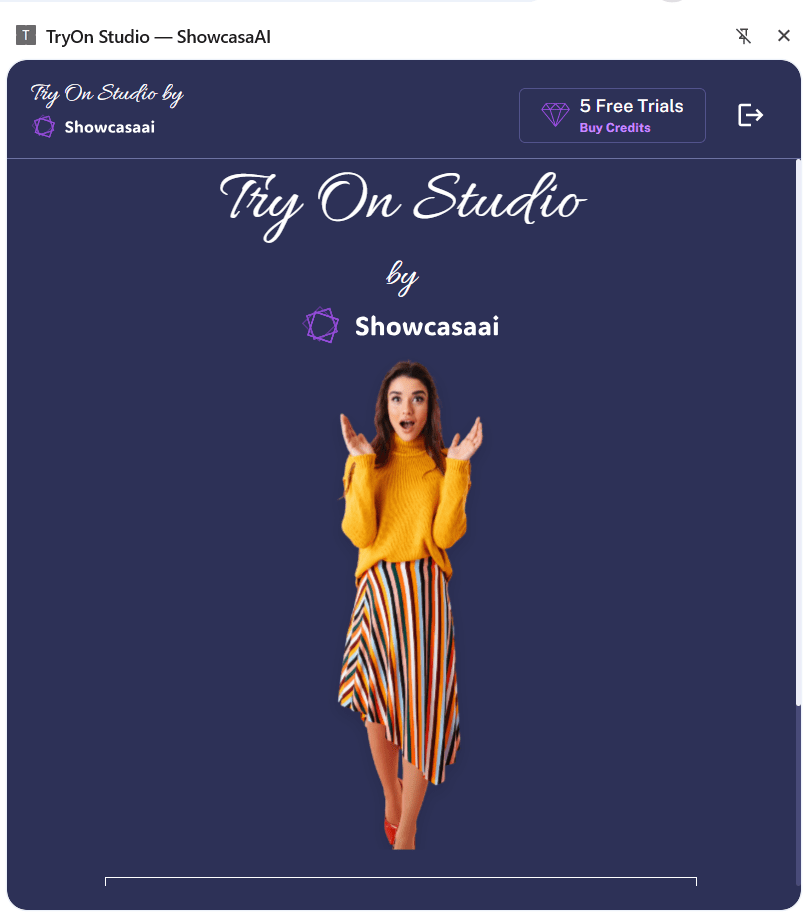
TryOn Studio — ShowcasaAI is a browser extension designed to remove that uncertainty.
Upload your photo, pick an outfit from anywhere on Chrome, and instantly see a realistic preview of yourself wearing it — no imagination required.

Getting Started with TryOn Studio – ShowcasaAI

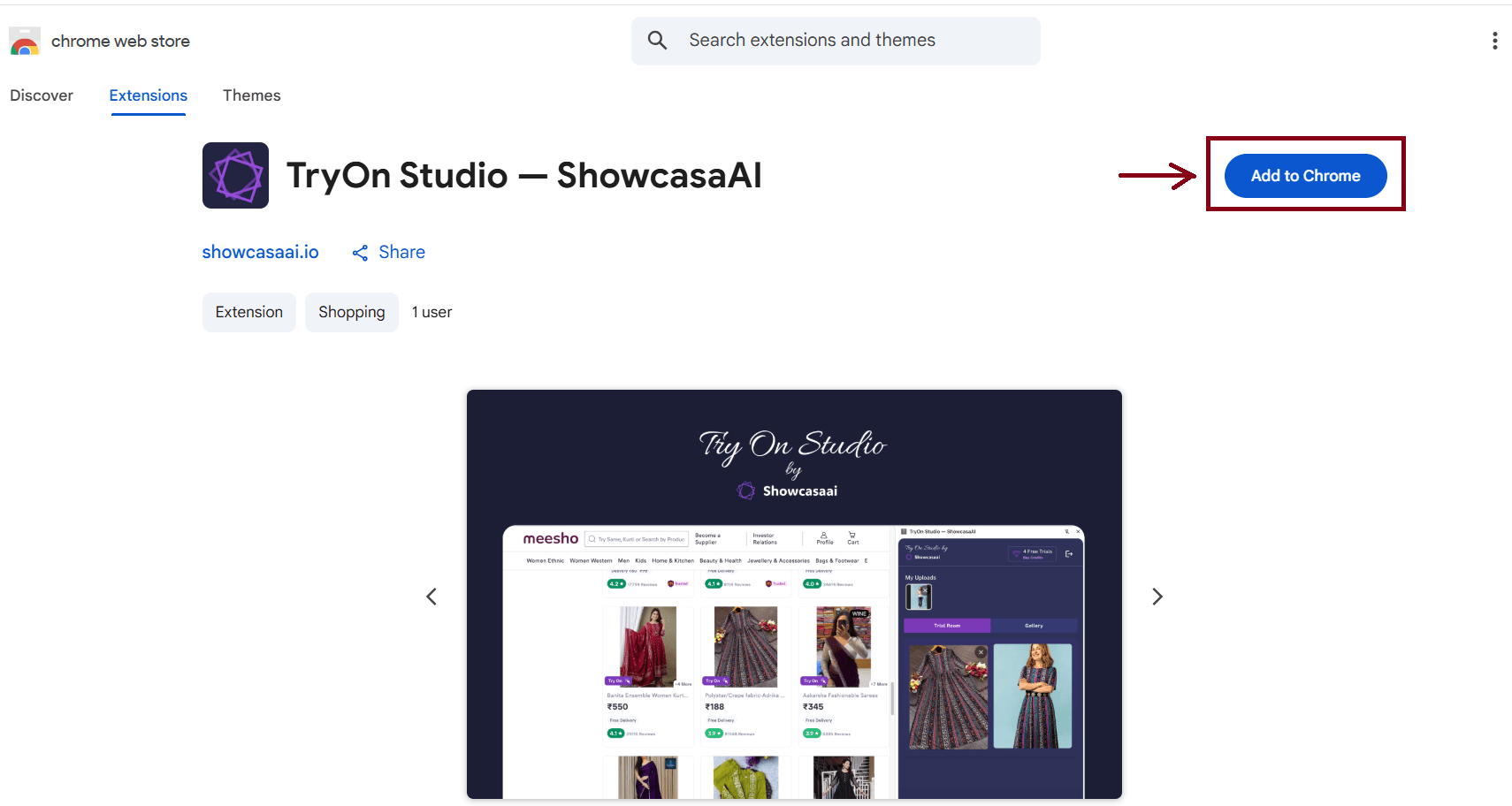
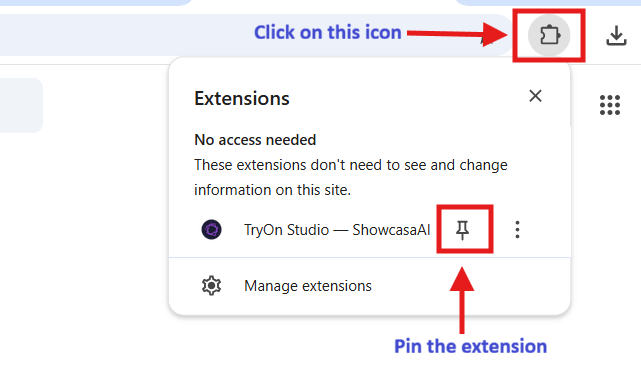
Install TryOn Studio -ShowcasaAIPin extension TryOn Studio - ShowcasaAI Home

Setting up TryOn Studio is simple and quick.

  • Install “TryOn Studio — ShowcasaAI” from the Chrome Web Store
  • Pin the extension from the 🧩 icon
  • Sign in and open the extension
  • You’re ready to start trying outfits virtually

Steps to Use the Try-On Feature

  1. Upload Your Image
    Open TryOn Studio — ShowcasaAI and upload a clear photo of yourself.
  2. Select a Try-On Outfit
    Browse any website, click on the outfit image you like, and choose Try On.
  3. Generate the Result
    Once both images are selected, click Generate to see the try-on preview.

That’s it — simple, fast, and seamless !

How the Try-On Feature Works

Model  Outfit  Generated Result

The try-on process is built around two images:

Upload Image:

This is your photo — the person who will wear the outfit.

Try-On Image:

This is the outfit image selected directly from any website on browser.

Once both images are selected, TryOn Studio transforms your photo by applying the chosen outfit with natural fit and realistic placement.

The quality of the output depends heavily on how these two images are chosen.

Choosing the Right Upload Image (Your Photo)

Think of your upload image as the foundation of the try-on.

Works best when:

  • Only one person is visible
  • The image is clear, sharp, and well-lit
  • The pose is front-facing or naturally standing
  • Most of the body is visible
  • Clothing is simple and not heavily layered

Avoid when possible:

  • Group photos
  • Blurry or dark images
  • Cropped or partially visible bodies
  • Extreme poses or angles

Why this matters:

For the best results, TryOn Studio — ShowcasaAI needs a clear body shape and pose to replace the outfit accurately and naturally.

Choosing the Right Try-On Image (Outfit)

The try-on image defines how realistic your final result will feel.

Best results come from:

  • Outfits that are clearly visible
  • Full outfits rather than single items
  • Model, mannequin, or flat-lay images
  • Outfit type that logically fits the uploaded image

Tip:

If you select a single clothing item (like a T-shirt or top), make sure the uploaded image already has the remaining outfit (such as pants or bottoms). This helps the outfit blend naturally.

Common mistake to avoid:

If the uploaded image and try-on outfit don’t match, the result may look unnatural.

Example:
Upload image: Woman wearing a saree
Try-on image: Jeans only


In this case, the jeans may appear on top of the saree, making the output look unrealistic.

Simple rule to remember:

The try-on outfit should replace what you’re wearing — not layer over it.

Final Thoughts

TryOn Studio — ShowcasaAI helps you see fashion clearly — not just imagine it.

When images are chosen thoughtfully, the results feel natural, realistic, and surprisingly accurate.
Start free, understand the flow, and upgrade when you’re ready to explore without limits.

Fashion confidence starts here.

Building Smarter Agents with OpenAI's Agent Builder

Building Smarter Agents with OpenAI’s Agent Builder 🛠️

Building Smarter Agents with OpenAI’s Agent Builder 🛠️

In the race from chatbots to autonomous AI, the new Agent Builder by OpenAI stands out as a powerful leap. It lets developers design agents that not only talk, but also think, plan, act, and coordinate tools. Below we explore what Agent Builder offers, how it works, and how you can get started—complete with architecture visuals and links to deeper references.


What is Agent Builder?

Agent Builder is part of OpenAI’s growing toolset for creating agentic systems. It provides a visual, modular canvas to compose multi-step workflows using LLMs, tools, and logic. The aim is to make it easier to build agents that can carry out real tasks—beyond simple question-answering.

OpenAI describes agents as systems that independently accomplish tasks on behalf of users, selecting tools, monitoring progress, recovering from failures, and reasoning about next steps. (OpenAI)

With the introduction of AgentKit, OpenAI now bundles Agent Builder with other capabilities (Connector Registry, ChatKit, evaluation tools) to enable developers to build, version, and monitor agents more reliably. (OpenAI)


Key Components & Architecture

When you use Agent Builder, you’re effectively wiring together several core abstractions:

1. Tools / Actions

Agents are configured with “tools” they can call—APIs, database queries, file operations, etc. Each tool has defined input/output schemas so the agent knows when and how to invoke it. (OpenAI Developers)

2. Planner / Orchestration / Agent Loop

The agent uses logic to break high-level goals into subtasks, sequence steps, and decide which tool to call next. The “agent loop” is the recurring cycle: decide → act → observe → decide again. (OpenAI GitHub)

3. Memory / State

To handle dialogues or multi-step flows, the agent maintains memory. It can recall past observations, intermediate results, or user preferences. That enables continuity and contextual decisions. (OpenAI Developers)

4. Guardrails & Validation

To improve safety and robustness, Agent Builder lets you define guardrails or checks on inputs/outputs—so the agent can detect anomalies or abort invalid steps. (OpenAI GitHub)

5. Handoffs / Multi-Agent Coordination

In more advanced setups, one agent can hand off tasks to another specialized agent (e.g. a “data agent” vs a “writing agent”). AgentKit supports such delegation. (OpenAI GitHub)

The image above (from a Medium article) shows a typical architecture layout for agents and how different components interact (Tools, Agent core, Orchestration, Tracing).

Another visual (not shown here) might depict “agentic system architecture” layering tools, reasoning, and the orchestration layer.


How Agent Builder Works (Step by Step)

  1. User issues a request or goal (e.g. “Plan my trip to Japan, book flights, suggest itinerary”).
  2. The agent’s planner examines the goal, checks memory/context, and formulates a plan: a sequence of tool calls or reasoning steps.
  3. The agent executes steps—maybe first calling a flight-search API, then a hotel booking API, then generating an itinerary.
  4. After each action, the observation or tool response is fed back to the agent, updating memory or altering the plan.
  5. The agent continues until it deems the task complete or needs to hand control back to the user.
  6. Throughout the process, guardrails validate that the agent doesn’t stray into invalid or unsafe outputs.

This loop supports sophisticated, multi-step automation—like an agent that researches, synthesizes data, and takes actions on your behalf.


Benefits & Use Cases

Why use Agent Builder instead of ad hoc prompt engineering?

  • Modularity & observability: Since actions are discrete tools, workflows are transparent and debuggable.
  • Scalable complexity: Branching logic, conditionals, retries, fallback strategies—all become manageable.
  • Extensibility: New tools or capabilities can be added without rearchitecting everything.
  • Contextual coherence: Memory ensures continuity across long interactions.

Use cases include:

  • Virtual assistants that perform operations (e.g. booking, document generation)
  • Customer support agents integrating with internal systems
  • Agents that query enterprise data, analyze results, and generate executive summaries
  • Content creation pipelines involving search, drafting, editing, publishing

Getting Started & Best Practices (With Links)

  • Try the Agents SDK (Python): install via pip install openai-agents. (OpenAI GitHub)
  • Start with a minimal agent (one or two tools) and simple instructions.
  • Use tool schemas to clearly define inputs and outputs.
  • Gradually add memory or handoffs as needed.
  • Enable and monitor tracing / logs to understand the agent’s decisions.
  • Design guardrails to catch aberrant outputs or failure states.
  • Test edge cases (tool failures, exceptions).
  • Use versioning—the Agent Builder canvas supports evolving your workflow. (OpenAI)
An elderly couple is-depicted-sitting-on-the-steps-of-their-traditional-Indian-home

Vibrant Visions: Celebrating Holi with AI-Generated Artwork

In the spirit of Holi, the festival of colors, we’ve embraced the fusion of tradition and technology by creating stunning, vibrant images using AI image generators like Dall-E and Bing AI. This innovative approach allows us to capture the essence of Holi in a way that’s both imaginative and deeply respectful of the festival’s rich heritage. By inputting detailed prompts that reflect the joy, community, and color of Holi, we’ve generated unique pieces of art that celebrate this auspicious occasion. Each image, with its explosion of colors and scenes of jubilation, not only pays homage to the traditional aspects of Holi but also showcases the incredible potential of AI in the realm of creative expression. Through our blog, we invite you on a visual journey that marries the ancient with the cutting-edge, offering a fresh perspective on Holi celebrations.

Launched Copilot for Microsoft 365: AI-Powered Productivity and Creativity for Organizations

Microsoft has launched a new premium subscription service called Copilot Pro for individuals. The subscription costs $20 per month and provides advanced AI capabilities, access to Copilot in Microsoft 365 apps, priority access to the latest models, enhanced AI image creation, and the ability to create Copilot GPTs 12.

For organizations, Microsoft has launched Copilot for Microsoft 365, a subscription that provides AI-powered productivity and creativity across emails, meetings, chats, documents, and more, plus the web. It is now available for businesses of all sizes, including small- and medium-sized businesses, and through Microsoft Cloud Solution Provider partners 3.

Copilot GPTs is a new feature that lets users customize the behavior of Copilot on a specific topic. A handful of Copilot GPTs are available today, and Copilot Pro users will soon be able to create their own Copilot GPTs using Copilot GPT Builder 12.

Microsoft has also launched a new Copilot mobile app that gives users the power of Copilot on the go, with access to GPT-4, Dall-E 3, and image creation. The app is available for Android and iOS users and has the same capabilities as the PC version. It is also available in the Microsoft 365 mobile app for Microsoft account holders 4.

In summary, Microsoft has launched a suite of new products and features under the Copilot brand. Copilot Pro is a premium subscription service for individuals that provides advanced AI capabilities, access to Copilot in Microsoft 365 apps, priority access to the latest models, enhanced AI image creation, and the ability to create Copilot GPTs. Copilot for Microsoft 365 is a subscription service for organizations that provides AI-powered productivity and creativity across emails, meetings, chats, documents, and more, plus the web. Copilot GPTs is a new feature that lets users customize the behavior of Copilot on a specific topic. Copilot mobile app is a new app that gives users the power of Copilot on the go, with access to GPT-4, Dall-E 3, and image creation1324

AgilizTech
Privacy Overview

This website uses cookies so that we can provide you with the best user experience possible. Cookie information is stored in your browser and performs functions such as recognising you when you return to our website and helping our team to understand which sections of the website you find most interesting and useful.